Atc Brix Meter Explained: A UK Buyer's Guide
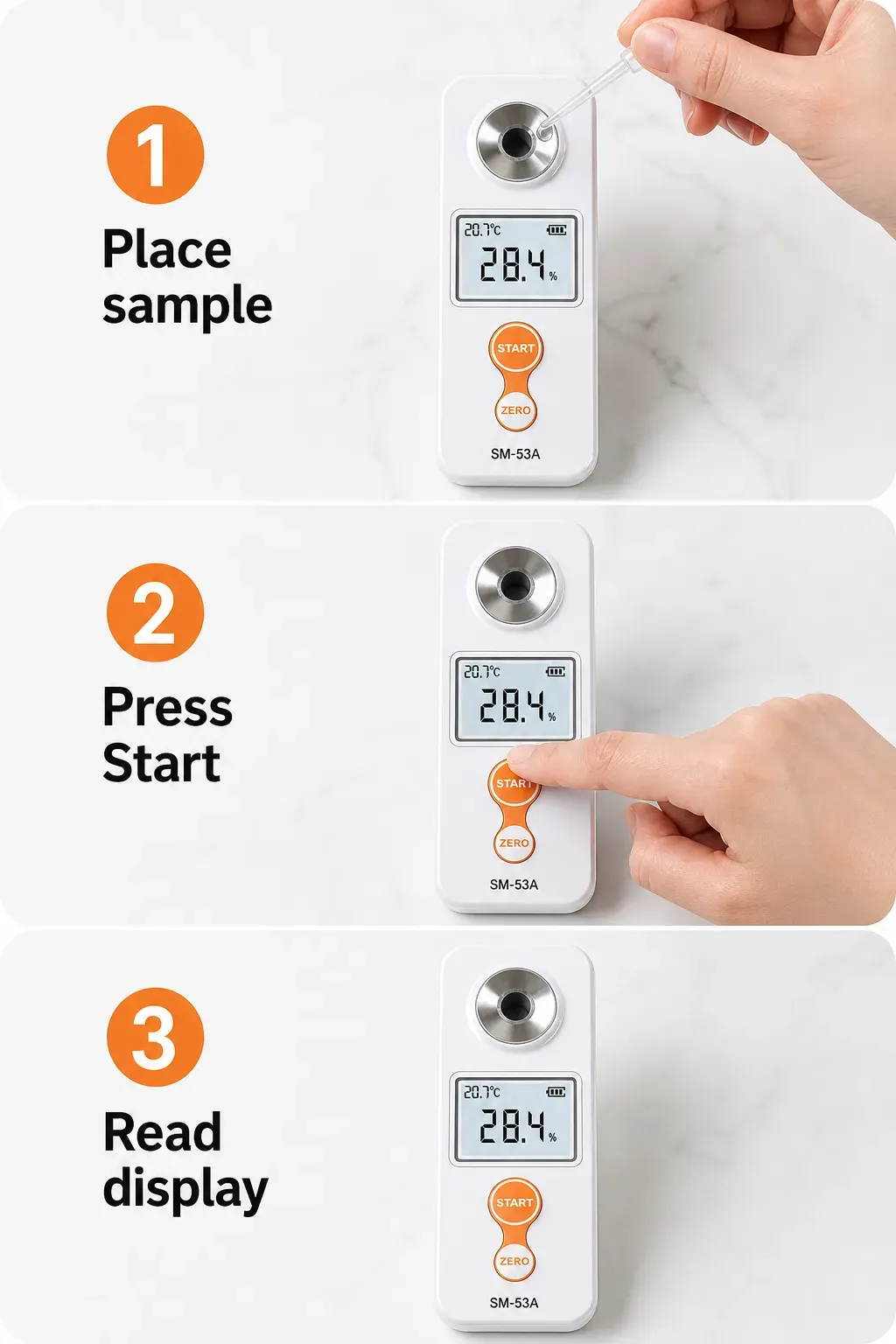
ATC Brix Meter Explained: A UK Buyer's Guide
TL;DR: An ATC Brix meter is a refractometer that measures the sugar concentration of liquids in Brix and automatically adjusts for normal temperature changes, helping UK food and drink teams get faster, more consistent readings for juice, syrups, soft drinks and routine quality control.
Key Takeaways
- An ATC Brix meter measures dissolved sugar concentration and uses automatic temperature compensation to reduce temperature-related reading errors.
- For UK juice production, soft drinks, cafés, catering, brewing prep and food manufacturing, ATC helps deliver faster, more repeatable daily quality control.
- A digital model is typically easier to read, quicker to train staff on and better suited to routine beverage checks than analogue alternatives.
- When buying an ATC Brix meter, focus on range, accuracy, ease of calibration, sample speed, cleaning, build quality and supplier support in the UK.
- For fruit juice, syrups and soft drinks, a 0-55 Brix refractometer is a practical range for many commercial and lab-style applications.
An ATC Brix meter is used to measure the sugar concentration of a liquid sample in Brix, while automatic temperature compensation helps correct for normal sample temperature differences. In practice, this makes it a useful tool for UK buyers who need quick, repeatable readings for fruit juice, syrups, soft drinks and other beverage quality checks.
One degree of sugar concentration can be the difference between a drink that tastes balanced and one that feels inconsistent from batch to batch. Therefore, for UK beverage businesses, kitchens and production teams, that difference matters commercially. Customers notice flavour drift, and internal teams lose time when quality checks are slow or unclear. That is why the ATC Brix meter has become a standard tool for checking juice, concentrates, syrups and mixed drinks with speed and confidence.
At HighPrecis, we work with buyers looking for practical measurement tools rather than vague specifications. Based on our testing of handheld digital units for routine beverage checks, most buyers want the same outcome: a digital Brix refractometer or ATC Brix meter that gives quick, repeatable sugar readings with minimal operator interpretation. This guide explains what an ATC Brix meter does, why ATC matters, what UK buyers should look for, and where a 0-55 Brix refractometer fits into real-world use.
What is an ATC Brix meter?
An ATC Brix meter is an instrument used to measure the Brix value of a liquid sample. Brix indicates the percentage of dissolved solids in solution, expressed primarily as sugar content in many beverage applications. In practical terms, a reading of 12 Brix generally means about 12 grams of sucrose per 100 grams of solution, although real drinks often contain acids, minerals and other dissolved compounds that can influence the reading.
The “ATC” part stands for automatic temperature compensation. Because refractive index changes with temperature, a sample that is warmer or cooler can produce a different reading even when the sugar concentration has not changed. ATC adjusts for this effect within the meter’s operating range, helping produce more consistent results without constant manual correction.
Most buyers searching for an ATC Brix meter are trying to solve one of three problems:
- Reducing inconsistency in drink production or preparation
- Speeding up routine sugar checks during intake, mixing or batching
- Replacing subjective taste-based checks with a measurable QC process
For many UK users, that makes a digital ATC unit especially attractive. Instead of interpreting a scale manually, staff can place a small sample on the prism, wait for the reading and record a clear numerical result.
How does an ATC Brix meter work?
What does a Brix refractometer actually measure?
A Brix meter works by measuring how light bends when it passes through a liquid sample. The more dissolved solids present, the more the light is refracted. The instrument then converts that optical behaviour into a Brix value.
This method is widely used because it is fast, uses only a small sample volume and suits regular testing. As a result, in beverage quality control it offers a practical balance between speed and precision.
Why does automatic temperature compensation matter?
Temperature is one of the main reasons readings can shift unexpectedly. In a UK production environment, that is common: chilled juice from cold storage, room-temperature syrup in a prep area, and warm samples near processing equipment can all behave differently at the point of measurement.
ATC helps account for these differences. However, it does not remove the need for good testing practice. Instead, it supports more dependable readings across normal working conditions. That is especially valuable in busy settings where multiple operators are checking products throughout the day.
Why do digital readings improve routine QC?
Digital instruments reduce operator interpretation. With analogue models, line reading can vary slightly between users, particularly under uneven lighting. By comparison, a digital ATC Brix meter provides a direct display result, which can simplify training, reduce recording mistakes and support more consistent handovers between staff.
Why do UK buyers choose an ATC Brix meter?
UK buyers are usually balancing quality, compliance, speed and staff usability. Whether the meter is being used in a small juice bar, a catering operation, a food lab or a beverage production site, the priority is the same: reliable readings without slowing the workflow.
There is also a broader quality context. According to UK Government sugar reduction programme industry progress reports, Public Health England recorded a 14.9% reduction in sales weighted average total sugar per 100ml for soft drinks between 2015 and 2020. Consequently, that does not remove the need for sugar testing; it increases the need for tighter formulation control, clearer benchmarking and repeatable checks during production and reformulation.
For British businesses supplying retail, hospitality or contract manufacturing channels, measurement consistency supports:
- Stable flavour profiles across batches
- Improved internal quality records
- Faster release decisions during production
- Reduced waste from over-correction or inconsistent blending
- More efficient staff training in QC procedures
Where is an ATC Brix meter used in the UK?
How is an ATC Brix meter used in fruit juice production?
Fruit juice is one of the clearest use cases for an ATC Brix meter. Natural raw material variation means sweetness can change by fruit type, harvest, supplier and storage condition. Therefore, a quick reading helps teams assess incoming juice, adjust blends and maintain target specifications.
How is an ATC Brix meter used for soft drinks and syrups?
Soft drink producers and syrup users rely on Brix values to maintain sweetness, mouthfeel and dilution control. If syrup concentration drifts, finished taste and consistency can drift with it. A digital Brix meter for juice and soft drinks gives a rapid checkpoint before issues spread across a larger batch.
Can cafés, bars and catering teams use an ATC Brix meter?
Not every buyer is running a factory. In hospitality settings, Brix testing can be useful for house-made cordials, cocktail ingredients, fresh juice prep and premium beverage menus where consistency matters. In those cases, an easy-to-clean, fast-reading ATC meter is often a better fit than a more complex bench setup.
Is an ATC Brix meter useful in food manufacturing and development kitchens?
R&D teams and production kitchens often use Brix readings during formulation, product comparison and process checks. Based on our experience with UK buyers, the main advantage is speed: teams can compare samples quickly, spot variation earlier and make more confident adjustments during trials or production runs.
What should you look for when buying an ATC Brix meter?
What Brix range is right for juice, syrup and soft drinks?
The right range depends on what you are measuring. For many beverage applications, a 0-55 Brix refractometer is a practical choice because it covers fruit juice, syrups, concentrates and many soft drink checks without being overly specialised.
How accurate should an ATC Brix meter be?
Accuracy matters, but repeatability matters just as much for day-to-day QC. A meter that gives stable, consistent readings under normal working conditions is often more useful than one with strong headline specifications but poor usability in practice.
How easy is it to calibrate and clean?
For routine use, calibration and cleaning should be straightforward. Look for a design that allows quick prism cleaning between samples and simple calibration checks, particularly if multiple staff members will use the meter across shifts.
Why does build quality and UK supplier support matter?
Build quality affects reliability, especially in busy prep and production areas. In addition, UK-based supplier support can make a meaningful difference when you need advice on setup, calibration, replacement or product selection. For many buyers, that support is part of the value, not an afterthought.
Is a digital ATC Brix meter better than an analogue model?
For most UK buyers running routine beverage or food checks, a digital ATC Brix meter is usually the more practical option. It is easier to read, quicker to train staff on and less dependent on operator judgement. As a result, it tends to suit repeat daily testing better than an analogue unit.
That said, the better choice still depends on workload, environment and budget. If multiple users need fast, consistent readings and simple record-keeping, digital is often the stronger fit.
How do you get accurate readings from an ATC Brix meter?
Good testing practice still matters, even with automatic temperature compensation. For the most reliable results:
- Use a clean prism and apply a fresh sample each time
- Check calibration at the recommended interval
- Avoid contaminated or highly aerated samples where possible
- Follow the manufacturer’s stated ATC operating range
- Record results consistently as part of your QC process
In other words, ATC helps reduce temperature-related variation, but it works best when paired with consistent sampling and handling.
Frequently asked questions about ATC Brix meters
What does ATC mean on a Brix meter?
ATC means automatic temperature compensation. It helps the meter adjust for normal temperature variation so that readings are more consistent when samples are not all at exactly the same temperature.
Is an ATC Brix meter accurate for juice testing?
Yes, for routine juice testing an ATC Brix meter is widely used because it provides quick, repeatable readings when properly calibrated and used correctly. However, the result still reflects total dissolved solids, so interpretation should match the product being tested.
What is the best Brix range for soft drinks and syrups?
For many UK beverage applications, a 0-55 Brix refractometer is a practical range because it covers many common juice, syrup and soft drink measurements without narrowing the instrument to one use case.
Do UK cafés and food businesses need a digital ATC Brix meter?
Many do, especially where consistency, staff usability and quick daily quality checks matter. Smaller operations may not need a complex lab setup, but they can still benefit from fast Brix verification during prep and service.
Final thoughts: is an ATC Brix meter worth it?
For UK buyers who need a straightforward way to check sugar concentration in drinks and liquid food products, an ATC Brix meter is often a practical investment. It helps teams work faster, standardise checks and reduce avoidable variation in day-to-day production.
Based on our testing and buyer conversations at HighPrecis, the most successful purchases usually come from matching the meter to the real workflow: the sample types, the staff using it, the speed required and the level of consistency expected. When those factors are clear, choosing the right ATC Brix meter becomes much simpler.
Ready to try HighPrecis?
Shop Now — £30.99