Beverage Refractometer Explained: A UK Buyer's Guide
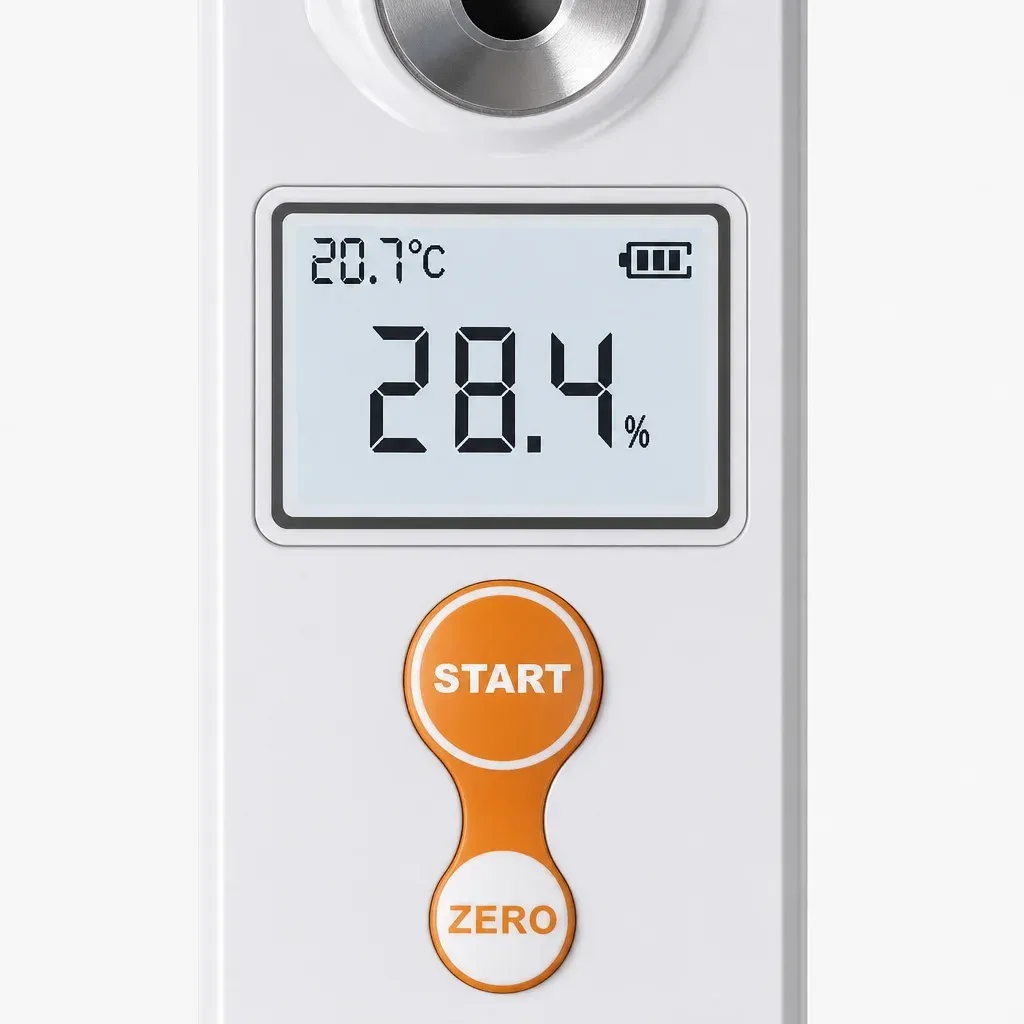
A beverage refractometer is a tool used to measure dissolved sugar and soluble solids in drinks, usually as degrees Brix, so UK producers, cafés, juice bars and lab teams can check consistency quickly and repeatably.
TL;DR: A beverage refractometer helps you measure Brix in juice, soft drinks, syrups and other beverages within seconds. Based on our testing of routine beverage samples, digital models with automatic temperature compensation are usually the most practical choice for day-to-day UK quality control because they reduce reading errors, speed up checks and support more consistent records.
Key Takeaways
- A beverage refractometer measures how light bends through a liquid to estimate sugar concentration, usually in degrees Brix.
- It is widely used for fruit juice, soft drinks, syrups and routine beverage quality control because it is quick, practical and easy to repeat.
- Digital models with automatic temperature compensation (ATC) help reduce operator error and improve consistency in day-to-day testing.
- For most beverage applications, a 0-55 Brix range suits juice, cordials, concentrates and many soft drink checks.
- UK buyers should assess measurement range, accuracy, calibration method, hygiene, build quality, display clarity and after-sales support before purchasing.
When a drink tastes inconsistent, the problem is rarely abstract. Instead, it usually comes down to a measurable shift in formulation, dilution, fruit ripeness or process control. A beverage refractometer helps catch that shift early. Therefore, for businesses selling juice, squash, smoothies, soft drinks or flavoured water, a few seconds of testing can protect product consistency, reduce waste and support documented quality checks.
At HighPrecis, the focus is on practical instruments that suit real beverage testing: a digital Brix refractometer, Brix meter for juice, sugar content tester, 0-55 Brix refractometer and ATC Brix meter designed for quick, repeatable sugar readings for fruit juice, soft drinks and daily beverage QC. This guide explains what a beverage refractometer does, how it works, what UK buyers should look for, and where it fits into everyday operations.
What Is a Beverage Refractometer?
A beverage refractometer is a measuring instrument used to estimate the concentration of dissolved solids in a drink by analysing refractive index. In beverage work, that reading is most commonly converted into degrees Brix, which represents the percentage of sucrose by mass in a solution. In simple terms, 10 degrees Brix means roughly 10 grams of sucrose per 100 grams of solution.
For many drinks, especially fruit juice and sugar-based soft drinks, Brix is a useful proxy for sweetness, concentration and batch consistency. However, it does not tell the whole story of flavour, acidity or mouthfeel. Even so, it remains one of the most efficient frontline measurements in beverage quality control.
Manual optical refractometers have been used for years, but digital beverage refractometers have become the preferred option for many operators because they are faster to read, easier to standardise across staff and less dependent on subjective judgement.
Why Does Brix Matter in Beverage Production?
Brix matters because sweetness and concentration affect both consumer experience and process control. For example, a juice that falls outside its expected Brix range may taste thin, overly sweet or inconsistent with label expectations. Likewise, for syrup-based drinks, the wrong reading can indicate dilution errors, mixing faults or raw ingredient variation.
In practical UK settings, beverage refractometers are used by:
- Fruit juice processors checking incoming fruit juice and finished batches
- Soft drink manufacturers verifying syrup concentration and line consistency
- Cafés and juice bars maintaining repeatable drink recipes
- Contract packers documenting routine quality checks
- Food and beverage laboratories carrying out rapid screening before further analysis
How Does a Beverage Refractometer Work?
A beverage refractometer works by shining light through a small liquid sample and measuring how much the light bends. The degree of bending changes according to the concentration of dissolved substances in the liquid. The instrument then converts that optical behaviour into a displayed result, often in Brix.
For beverage applications, the process is straightforward: place a few drops of sample on the prism or sample well, allow the reading to stabilise, and then record the result. In a digital unit, the reading appears on screen in seconds.
Why Is Automatic Temperature Compensation Important?
Temperature affects refractive index, which means it can affect readings. That is why automatic temperature compensation, or ATC, is important in beverage testing. An ATC Brix meter adjusts readings to account for temperature variation within its operating range, helping maintain consistency when samples are not at a perfectly controlled laboratory temperature.
For UK workplaces, where testing may happen on a production floor, in a prep room or during receiving checks, ATC is a practical benefit rather than a luxury. As a result, it reduces one source of variation and supports more repeatable results across shifts.
What Can a Beverage Refractometer Tell You?
A beverage refractometer can quickly indicate whether a sample is within the expected soluble solids range. It is excellent for trending, spot checks and batch comparison. In particular, it is useful when the drink matrix is well understood and the target Brix range is established.
What Can a Beverage Refractometer Not Tell You?
It cannot replace every laboratory method. Brix is not the same as total nutrition, exact sugar profile or microbiological safety. In addition, drinks containing significant levels of alcohol, acids, salts or other dissolved ingredients may need more careful interpretation because those components can also affect refractive index. For that reason, refractometer results are best used as part of a documented quality system rather than as a lone measure.
How Is a Beverage Refractometer Used in UK Quality Control?
In the UK beverage market, consistency is not simply a commercial preference. It also supports due diligence, product specification control and customer trust. A beverage refractometer is often one of the quickest tools for confirming that a product matches the intended formulation before it moves further down the line.
According to UK food business expectations set by the Food Standards Agency, products should be safe and be what they say they are. While a refractometer does not prove compliance on its own, it helps businesses verify routine process conditions and maintain records that support internal quality assurance. In parallel, NHS guidance continues to highlight the importance of monitoring sugar intake in the wider public health context, making accurate sugar-related measurements increasingly relevant in product development and reformulation work.
As a market reference point, the British Soft Drinks Association reported that between 2015 and 2023 the average sugar content of soft drinks subject to the levy fell by 46 per cent, showing how closely sugar levels are being monitored across the sector. Therefore, for manufacturers and beverage developers, instruments that support quick sugar concentration checks are directly relevant to that operating environment.
Why Are Digital Beverage Refractometers Popular with UK Buyers?
Digital beverage refractometers are popular because they simplify routine testing. Compared with manual optical units, they usually offer clearer readouts, less operator interpretation and faster training for new staff. Consequently, they are well suited to busy production areas, prep spaces and quality control benches.
Based on our testing of common beverage workflows, digital models are especially useful where several team members need to take readings across a shift and achieve comparable results. That consistency matters when businesses are recording Brix values for specifications, intake checks, batch release or troubleshooting.
What Features Should You Look for in a Beverage Refractometer?
- A suitable Brix range for the beverages you test, such as 0-55 Brix for juice, syrups and concentrates
- Good stated accuracy and repeatability
- Automatic temperature compensation for routine working conditions
- Simple calibration, ideally with distilled water or a clear standard method
- An easy-to-clean sample area for hygiene and quick turnaround
- A clear digital display that reduces reading errors
- Solid build quality and dependable after-sales support in the UK
Is a 0-55 Brix Range Right for Most Beverage Testing?
For many beverage businesses, yes. A 0-55 Brix refractometer covers a broad range of applications including fruit juice, cordials, syrup checks, concentrates and many soft drink measurements. However, the right range still depends on your actual products and process points. If you only test low-Brix drinks, a narrower range instrument may offer better resolution. Conversely, for high-concentration syrups, you may need a model designed for higher values.
How Do You Use a Beverage Refractometer Correctly?
Using a beverage refractometer correctly starts with a clean instrument, a representative sample and a simple routine. First, calibrate the unit according to the manufacturer’s method. Next, place a small amount of sample on the prism or in the sample well. Then wait for the reading to stabilise before recording the result. Finally, clean the measuring surface thoroughly before the next test.
For best results, samples should be well mixed and free from bubbles or pulp clumps where possible. Although ATC helps, allowing very hot or very cold samples to settle closer to normal testing conditions can still improve consistency. Likewise, regular cleaning is important because syrup residues and dried sugars can distort later readings.
How Accurate Is a Beverage Refractometer?
Accuracy depends on the instrument specification, calibration condition, sample type and operator practice. In routine beverage QC, the goal is often reliable repeatability and fast identification of drift rather than full laboratory characterisation from a single reading. Therefore, a well-maintained digital beverage refractometer can be highly useful for daily decision-making, especially when it is paired with written procedures and periodic verification checks.
Who Should Buy a Beverage Refractometer?
A beverage refractometer is a practical choice for UK juice processors, soft drink producers, cafés, juice bars, contract packers, beverage developers and laboratory teams that need quick Brix checks. It is particularly valuable where product consistency, recipe control, intake verification or sugar monitoring are part of the daily routine.
For smaller operators, it can reduce guesswork and improve repeatability. For larger operations, it can support documented quality systems and faster line-side decisions. In either case, choosing a model that matches your drink types and testing frequency will matter more than choosing the most complex specification on paper.
Frequently Asked Questions About Beverage Refractometers
What does a beverage refractometer measure?
It measures refractive index and typically converts the result into Brix, giving a fast estimate of dissolved sugar or soluble solids in a drink.
Can a beverage refractometer be used for juice and soft drinks?
Yes. It is widely used for fruit juice, soft drinks, syrups and concentrates where Brix is part of routine quality control.
Are digital beverage refractometers better than manual ones?
For many UK users, yes. Digital models are usually easier to read, faster to standardise and less dependent on operator judgement, especially in busy working environments.
Why is ATC important in a beverage refractometer?
ATC helps correct for sample temperature variation, which improves consistency during routine beverage testing.
What Brix range is best for a beverage refractometer?
A 0-55 Brix range suits many juices, cordials, syrups and concentrates, but the right choice depends on the actual drinks and process stages you need to test.
Ready to try HighPrecis?
Shop Now — £30.99